The human being as a civilizational actor
CTSD begins with the human being: not an isolated individual, but a subject acting within life, relations, society, institutions, technologies, and the future.
 Comprehensive Theory of Self-Determination
Support
Comprehensive Theory of Self-Determination
Support
CTSD - a comprehensive theory of human self-determination
CTSD shows how a person becomes a conscious co-author of their life, relations, technological environment, and public future.
CTSD begins with the human being as individuality and subject, but not as an isolated individual.
Human identity is formed and expressed simultaneously across different domains: existence, body, inner stability, thinking, relations, institutions, technological environment, and economy.
Self-determination is the capacity to make conscious choices in these domains, assume responsibility, and shape the direction of one’s life.
CTSD begins with the human being: not an isolated individual, but a subject acting within life, relations, society, institutions, technologies, and the future.
Self-determination is not limited to personal choice. It is the capacity for self-knowledge, orientation, responsibility, and co-authorship.
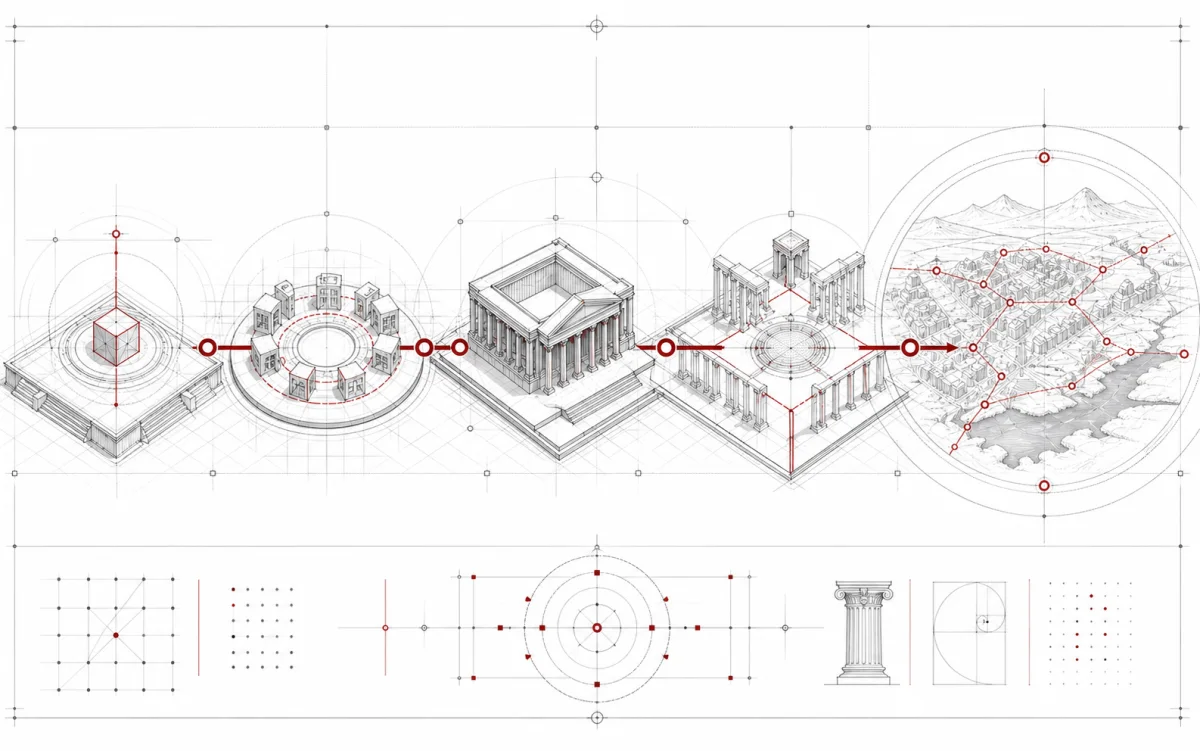
Human self-determination unfolds across connected levels: relations, society, institutions, the republic, and the civilizational future.
The five transitions show the vertical scale of self-determination. Each transition opens how personal self-determination becomes a relational, social, institutional, republican, and civilizational capacity.
The person recognizes their condition, limits, capacities, and values, becoming a conscious subject of their own life.
Self-determination moves beyond isolation and becomes a culture of relations, family, communities, trust, and coexistence.
Education, law, the economy, culture, and technological environments become infrastructures of self-determination.
The republic is assessed by the extent to which it expands the conditions for human, social, and institutional self-determination.
The human being becomes a conscious co-author not only of personal life, but also of public relations, technological environments, and the future.
How does a person know themselves and become a conscious subject of their own life?
Self-knowledge, will, choice, responsibility, and the capacity to shape the direction of one’s life.How does personal self-determination become a culture of relations and coexistence?
Trust, mutual recognition, boundaries, participation, and responsibility for shared life.What kinds of institutions preserve and expand human subjecthood?
Education, law, culture, economy, and technological environments as infrastructures of self-determination.What kind of republic creates real conditions for self-determination?
Politics, law, security, governance, and the public good evaluated by a republican criterion of self-determination.How does self-determination become a long-term civilizational direction?
Freedom, responsibility, technological awareness, and co-authorship of the future.The five transitions show the scale of self-determination from human being to civilization. The eight domains show the environments where human identity is formed and where self-determination is realized, strengthened, or disrupted.
The human relation to existence, meaning, freedom, mortality, and responsibility.
Inner states, will, fears, confidence, resilience, emotional stability, and psychological orientation.
Thinking, cognition, learning capacity, quality of decision-making, and orientation in a complex world.
Body, health, energy, lifestyle, environmental influence, and the basis of vital human capacities.
Family, friendship, community, trust, belonging, mutual recognition, and the culture of coexistence.
Law, educational and civic structures, professional paths, political participation, and systems that can expand or undermine human self-determination.
Work, property, finance, consumption, productivity, and the material conditions for action.
Technologies, digital environments, data, algorithms, and tools that should extend human subjecthood rather than replace it.
The map connects the eight domains and five transitions in one view, showing where self-determination is formed and how it extends from the human being toward civilization.
See the 8 domains and 36 formsThe map is applicable not only to public institutions or republican analysis. It can also work for personal, educational, professional, relational, social, and civic self-determination.
Self-knowledge, clarification of values, choosing a life direction, and responsible action.
Educational environments that help a person know themselves, form identity, and become a thinking subject.
Career orientation, work responsibility, creativity, and the capacity to act.
Family, communities, trust, reciprocity, and a social environment where people can participate and carry responsibility.
Citizen participation in public decisions, local life, and republican responsibility.
Leadership based not on control, but on subjecthood, trust, and responsible co-authorship.
Assessing technologies by whether they expand human self-determination or replace and weaken it.
Evaluating education, law, economy, governance, and republican policy by the criterion of creating conditions for self-determination.
Choose one of five starting paths. The complete structure is available from the grouped navigation above.
CTSD is a comprehensive theory of human self-determination as a civilizational capacity. It treats the human being not as an isolated individual, but as a subject acting within life, relations, society, institutions, technological environments, and the civilizational future.
02The Concepts page is a quick-reference library of CTSD’s core concepts. Through short definitions, it shows the connections among self-determination, subjecthood, identity, wholeness, and responsibility. The complete map of the 8 domains and 36 forms is presented on a separate page.
03This page presents the full CTSD map of self-determination domains and forms as a dedicated working map. It shows the internal structure of each domain and describes each form through its definition, healthy and distorted states, examples, interactions, self-check questions, and practices.
04A self-determination-based republic is a political and institutional form in which the republic is evaluated by the degree to which it creates conditions for the self-determination of citizens, communities, institutions, and the public future.
05CTSD is not only a theory. It also provides a methodological language for diagnosing, evaluating, and designing environments in which human and public self-determination can be strengthened or weakened.
If you want to apply this map in education, personal orientation, public life, institutional development, leadership, or civic self-determination, you can contact us.